physics · February 26, 2024
Hardware Foundations in Quantum Computing
Let's discuss a few of the most promising strategies for implementing a quantum computer
 Published by Matt
Exploring the Frontiers of Quantum Computing: A Dive into Diverse Approaches
Quantum computing stands at the cusp of revolutionizing the technological landscape, offering unprecedented computational power to solve complex problems across various domains. This post explores the fascinating world of quantum computing, focusing on the diverse methodologies being pursued and the leading entities in each area.
Quantum Annealing and Adiabatic Quantum Computing: D-Wave's Pioneering Path
Quantum annealing, a subset of adiabatic quantum computing, is designed for solving optimization problems by gradually evolving a quantum system into its ground state. D-Wave Systems has developed quantum annealers that are already being used for practical applications ranging from logistics optimization to machine learning.

Trapped Ions: Precision Computing with Ions
Trapped ion quantum computing uses ions as qubits, precisely controlled using electromagnetic fields. Companies like IonQ and Honeywell Quantum Solutions (now part of Quantinuum) are at the forefront, developing systems that boast high fidelity and scalability potential.

Superconducting Qubits: The Supercool World of Quantum Circuits
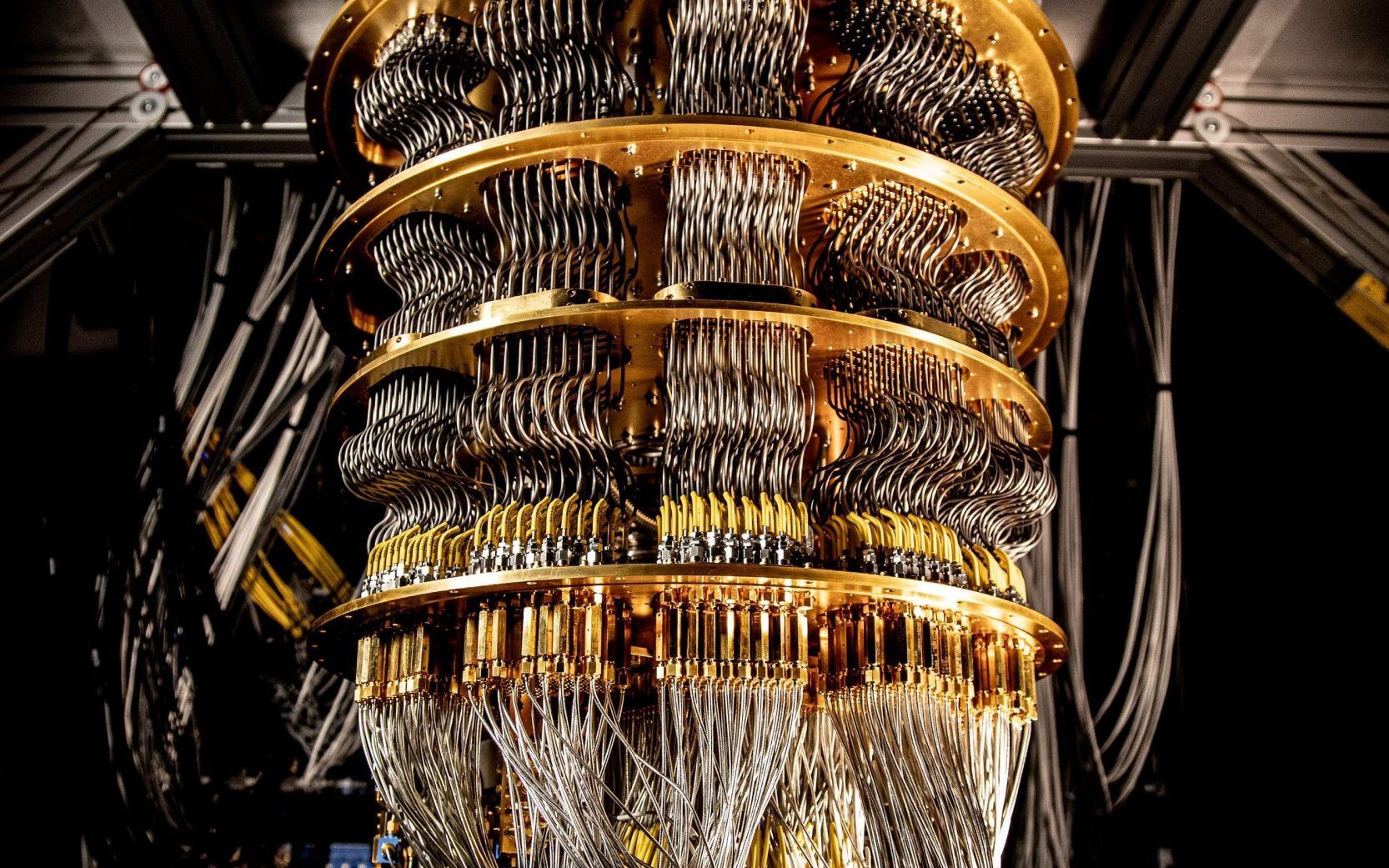
Superconducting qubits operate at near-absolute zero temperatures, leveraging the superconductivity phenomenon to perform quantum computations. Google's Quantum AI lab, IBM Quantum, and Rigetti Computing are pioneering this approach, each developing powerful quantum processors and cloud-based quantum computing services.

Topological Quantum Computing: The Quest for Robust Qubits
Topological quantum computing represents a groundbreaking approach that aims to use quasiparticles called non-Abelian anyons for computation, promising inherent error resistance. Microsoft's Station Q is leading research in this direction, though practical implementation remains a challenge. On a personal level, I have found this implementation to be supremely inspired. A friend from U of I who studied condensed matter physics first told me about this after I expressed my interest in quantum information. Essentially, the quantum logic operations are encoded in the theoretical world-lines of quasi-particles bounded on a 2-D surface. As the world lines twist around each other braids are formed, and these braids encode our operations. It has been shown that braid theory comprises the encoding complexity to satisfy quantum computation. This approach is resistant to external perturbations and decoherence as the information is represented by the braids instead of some measurable property of the physical qubit.

Optical/Photonic Quantum Computing: A Bright Future Ahead
Optical or photonic quantum computing uses photons for qubits, offering advantages in terms of speed and room-temperature operation. Companies like Xanadu Quantum Technologies and PsiQuantum are developing photonic quantum computers, aiming to leverage the properties of light to achieve quantum supremacy. I studied a bit of this my self in University and so this method will always hold a strong space in my heart. It is also most likely that tomorrow's quantum network will be passing photons around to transport quantum information.

Rydberg States: A New Player in Quantum Computing
Leveraging Rydberg states for quantum computing involves using highly excited states of atoms to enable qubit interactions over relatively large distances. This approach has been highlighted in recent research, indicating a promising avenue for scalable quantum computing. It represents another one of my favorite methods, as this approach was only deemed possible as a result of able funding and intellectual freedom. Researchers did not believe this to be a promising method at first, but our government told our field to leave no stone unturned and this discover was the result.

Conclusion
The quantum computing landscape is rich and varied, with each approach offering unique advantages and challenges. From the gradual evolution of quantum systems in quantum annealing to the robustness of topological qubits and the speed of photonic quantum computing, the race towards quantum supremacy is as diverse as it is fascinating. As research and development continue to advance, the dream of achieving practical and scalable quantum computing becomes ever more tangible, promising to unlock new potentials across science, medicine, and beyond.